Is There Really a Separate Fluid Service for the STI’s Center Differential?
For the 2020 STI, the evidence identifies no separate center-differential reservoir, dedicated lubricant, capacity or center-only service procedure.
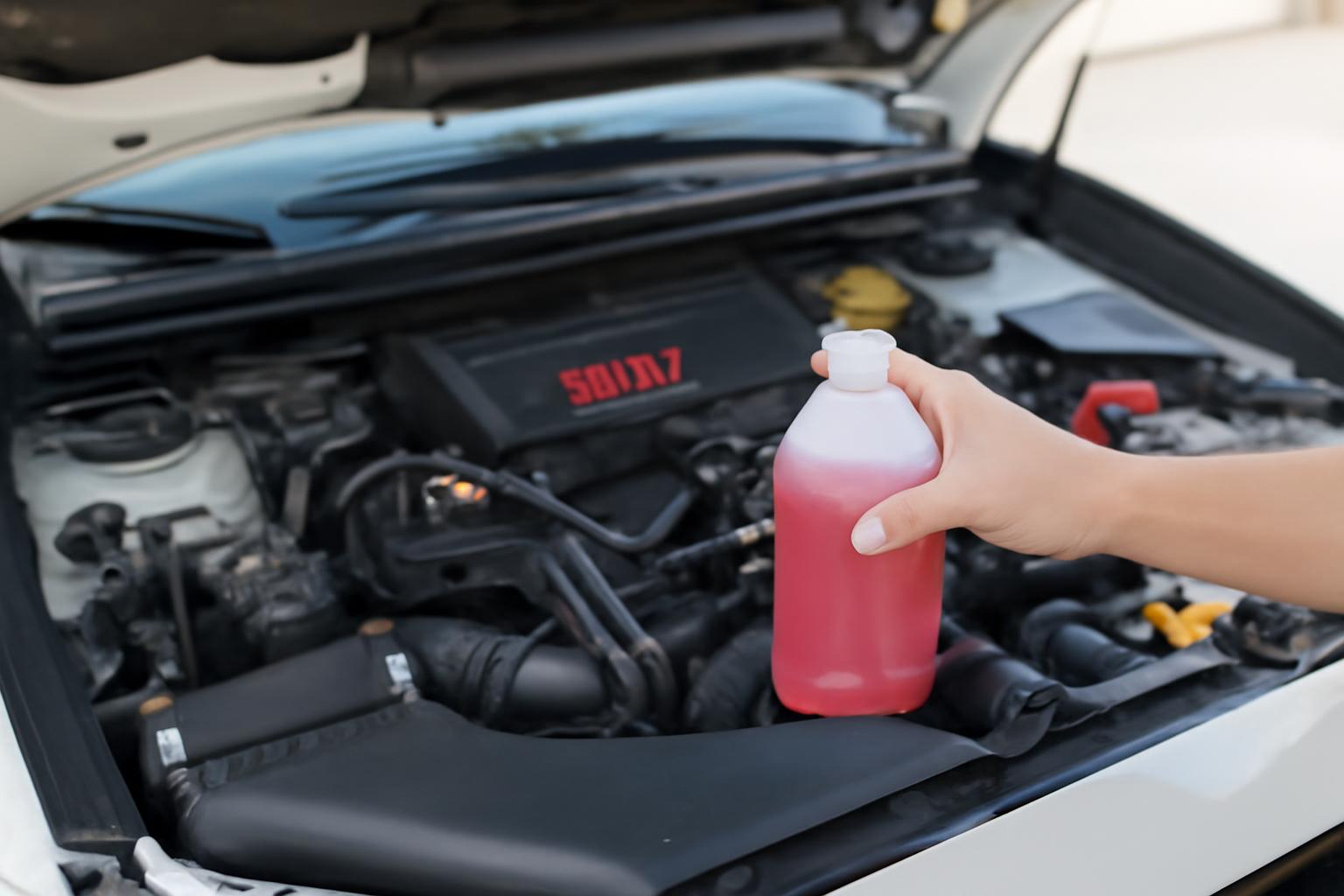
The short answer: the evidence does not show a separate center-differential fluid service
The supplied evidence does not identify a standalone center-differential fluid reservoir, center-differential-specific lubricant, independent capacity, or center-differential-only drain-and-fill procedure for the 2020 Subaru WRX STI.
Instead, the reviewed aftermarket listings organize drivetrain-fluid products around two apparent service areas:
- The six-speed transmission/front-differential assembly
- The separate rear differential
That does not prove that the Driver Controlled Center Differential, or DCCD, shares the transmission lubricant. The evidence consists of retailer product listings and an owner-forum discussion, not Subaru’s model-year-specific lubrication charts or workshop procedures. It therefore supports a limited conclusion: a separate DCCD fluid service is not established by the sources reviewed here.
Searching for “2020 STI center differential fluid” does not itself establish that the vehicle has a third lubricant compartment, a special bottle of oil, or separate center-differential fill and drain points. A named drivetrain component does not necessarily correspond to an independently serviced reservoir.
Evidence boundary
- The retailer listings consistently package lubricant for the transmission/front differential and rear differential.
- None identifies a third lubricant dedicated to the center differential.
- The evidence does not contain Subaru’s 2020 factory specifications, capacities, additive guidance, service intervals, plug locations, torque values, or final-level procedures.
- This article is a retailer-listing review and purchasing-orientation guide, not a verified factory service procedure.
Before purchasing or adding fluid, consult information specifically applicable to the 2020 STI. Relevant factory material would include the owner’s-manual maintenance schedule, six-speed manual-transmission lubrication specifications, rear-differential specifications, and the corresponding workshop procedures. Applicability should be confirmed by model year and, where parts or production changes matter, by VIN.
Center, front, and rear differentials: why the terminology causes confusion
The drivetrain terms describe components with different functions:
These components are functionally distinct, but component count is not the same as fluid-compartment count.
The useful service question is therefore not simply, “How many differentials does the car have?” It is, “Which lubricant compartments does Subaru instruct technicians to service separately on this model year?”
Retailer language points toward a transmission/front-differential service area and a separate rear-differential service area. It does not establish the DCCD’s precise lubrication arrangement. That distinction matters because retailer descriptions are organized to sell service kits, not to provide a complete factory lubrication diagram.
Owner terminology adds another layer of ambiguity. In an IW STi forum discussion centered primarily on a 2019 STI and experiences with earlier vehicles, participants use terms such as “transmission drain,” “front diff,” “center diff,” and “differential plug” without always identifying the housing or lubricant compartment consistently. The discussion can reveal questions owners commonly encounter, but it cannot verify the 2020 layout.
Component labels for fluid-service research
- Six-speed transmission/front-differential service area: Treated as a combined service area by the retailers reviewed here.
- DCCD center differential: A separate lubricant service is not established by these sources.
- Rear differential: Treated by the retailers as a separate service area.
These labels summarize the available listings. They are not a substitute for a factory lubrication diagram.
Organizing the issue around separately serviced lubricant compartments avoids two unsupported assumptions. One is that every named differential must have its own reservoir. The other is that components grouped together by retailers necessarily share lubricant exactly as Subaru specifies. Model-year-specific factory information is needed to resolve the actual arrangement.
What the 2020-compatible aftermarket kits actually contain
The available kits show how different retailers package STI drivetrain lubricants. Two listings expressly include the subject model year in their fitment ranges. The other identifies an STI six-speed application without expressly confirming that model year.
| Retailer | Stated STI fitment | Lubricant | Package quantity | Intended coverage | Included hardware | Evidence limitations |
|---|---|---|---|---|---|---|
| OAKOS kit | 2008–2021 STI for the relevant kit version, including 2020 | Red Line 75W90 GL-5 gear oil | Five one-US-quart bottles | Described as an STI six-speed drivetrain-fluid change kit | Transmission drain, oil-pan drain, and fill gaskets; two rear-differential drain/fill gaskets | Retailer compatibility claim; no factory capacity, compartment allocation, torque value, or separate center-differential service |
| Import Image Racing kit | 2004–2021 STI, including 2020 | Motul GEAR 300 75W90 | Six one-liter bottles | Retailer says the package is sufficient for the front transmission/differential and rear differential | None identified in the supplied evidence | Package volume and seller sufficiency claim are not factory fill specifications |
| FastWRX kit | STI six-speed manual transmission; 2020 fitment is not explicit | Subaru Extra-S gearbox fluid and Motul 90PA rear-differential fluid | Four one-US-quart bottles plus one liter | Gearbox and rear differential | None identified in the listing | General STI six-speed offering; no explicit 2020 fitment or Subaru approval for that model year |
OAKOS: one product for both stated service areas
OAKOS uses one listed GL-5 gear-oil product for the drivetrain work covered by its kit. Its included sealing parts also refer to transmission-related and rear-differential service points.
Those parts are useful shopping leads, but they are not VIN-verified requirements. Nor should the gasket names be treated as a complete factory map of every drain and fill point. Parts applicability and replacement instructions still require confirmation through current Subaru information.
Import Image Racing: one product for the stated drivetrain coverage
Import Image Racing likewise packages one lubricant and describes the kit as covering the front transmission/differential and rear differential.
The retailer’s statement that the bundle contains enough fluid is a sufficiency claim, not a factory allocation. The listing does not say how much belongs in each service area or establish how much should remain unused after the work.
FastWRX: different products for the gearbox and rear differential
FastWRX takes a different approach by assigning one product to the STI gearbox and another to the rear differential. This demonstrates variation in retailer packaging and formulation strategy; it does not prove that the other kits are wrong or that FastWRX represents Subaru’s 2020 requirement.
Most importantly for the central question, none of the reviewed listings includes a third product identified as center-differential fluid. None specifies an independent DCCD capacity or a center-differential-only service.
What repeated 75W-90 recommendations do—and do not—prove
The 75W-90 viscosity grade appears repeatedly in the aftermarket evidence. OAKOS lists Red Line 75W90 GL-5, Import Image Racing supplies Motul GEAR 300 75W90, and owners in the forum discussion report using various 75W-90 products.
It does not establish Subaru’s complete factory requirement for the 2020 STI.
The evidence falls into three distinct tiers:
| Evidence tier | What it can establish | What it cannot establish here |
|---|---|---|
| Subaru factory requirement | Official viscosity, performance standard, capacities, additive instructions, approved-product guidance, and procedures | No qualifying Subaru source was supplied |
| Retailer compatibility claim | What a seller markets for a stated model range and how it packages the work | Factory approval, exact capacity, universal suitability, or an official procedure |
| Owner-reported practice | What individual owners say they used or observed | Correctness for every vehicle, long-term compatibility, or a 2020 factory requirement |
A viscosity grade alone does not establish full compatibility. Product selection may also depend on the applicable performance standard, formulation, additive requirements, and compatibility with every component served by the lubricant.
The GL-5 designation in the OAKOS listing is a retailer-reported attribute of that product. It is not evidence that every generic GL-5 75W-90 oil is suitable for the STI six-speed transmission.
The evidence also does not establish that Red Line 75W90, Motul GEAR 300, Motul 90PA, or Subaru Extra-S is formally approved by Subaru for the 2020 STI. It establishes only that retailers sell those products for the applications described on their pages.
Before selecting a fluid, verify:
- Model year: The specification must apply to the 2020 STI rather than only to earlier cars or a generic six-speed application.
- Serviced compartment: Identify whether the product is intended for the transmission/front-differential area, rear differential, or another factory-documented compartment.
- Viscosity: Confirm the required SAE grade.
- Performance standard: Record the complete Subaru specification and any API classification Subaru identifies.
- Additive guidance: Determine whether friction modifiers or other additives are required, permitted, or prohibited.
- Approval language: Distinguish formal manufacturer approval from “compatible with,” retailer fitment, or owner-reported use.
- Final-level method: Use the factory procedure rather than a retailer’s bottle count to determine the correct level.
Repeated aftermarket use can identify candidate products. It cannot replace the missing factory specification.
Why four quarts, five quarts, and six liters are not competing factory capacities
The packages contain materially different amounts. FastWRX supplies four US quarts of gearbox fluid plus one liter of rear-differential fluid and attributes its gearbox quantity to lubricant remaining in the assembly during a routine change; that explanation is the retailer’s service-kit claim, not an OEM specification.
By comparison, the OAKOS package contains five US quarts, while the Import Image Racing package contains six liters. These are different purchasing quantities, not competing statements of official 2020 capacity.
Three volume concepts must be kept separate:
- Package quantity: The amount sold in the containers.
- Routine refill volume: The amount used after draining fluid according to the prescribed service procedure.
- Total or dry capacity: The amount associated with a fully empty assembly under the manufacturer’s definition.
The supplied evidence does not provide verified factory values for the second or third category. It also does not allocate the retailer bundles between the apparent service areas.
Possible explanations for differing package sizes include container sizing, intended surplus or coverage of multiple compartments, but the listings do not establish why each seller chose its quantity. No inference should be made that every container belongs in the vehicle.
| Known from the listings | Unknown for the 2020 STI |
|---|---|
| Retailers sell different package volumes | Factory routine-refill volume for each service area |
| Two retailers expressly claim fitment covering the subject model year | Factory total or dry capacity for each service area |
| The listings describe gearbox or transmission/front-differential coverage plus rear-differential coverage | Required allocation between compartments |
| One retailer separates gearbox and rear-differential products | Quantity expected to remain after a prescribed drain |
| No listing identifies a DCCD-specific bottle | Whether Subaru documents an independent DCCD lubricant service |
| Bottle counts are purchasing quantities | Subaru’s final-level method |
The factory procedure must determine the amount added and the final level. The evidence reviewed here does not establish that procedure, so kit contents cannot serve as a fill target.
Rear-differential fluid and limited-slip additives remain unresolved
The rear-differential additive question is separate from the center-differential question. Even if no independent DCCD service is identified, that does not determine whether the rear differential should use an LS-specific oil or supplemental friction modifier.
The owner discussion about a 2019 STI and earlier cars includes debate about regular 75W-90 products, LS formulations, Subaru-branded oil, and Motul Gear 300. Those comments are owner reports and interpretations rather than authoritative specifications for the 2020 model.
The thread also reproduces general Torsen guidance suggesting that lubricant needs can depend on differential type and on components sharing the lubricant. Because that material is quoted secondhand and does not identify the exact rear differential fitted to the 2020 STI, it cannot settle the additive question here.
The retailer listings do not resolve it either. Some package one product for both stated service areas, while FastWRX supplies different gearbox and rear-differential products. These are differing retailer strategies, not proof of a particular Subaru requirement.
The evidence therefore does not establish that the 2020 rear differential:
- Requires supplemental friction modifier
- Permits supplemental friction modifier
- Prohibits supplemental friction modifier
- Requires an LS-specific formulation
- Should use the same product as the transmission/front differential
Do not infer additive requirements from terms such as “limited slip,” “Torsen,” or “GL-5” alone. Verify the exact rear-differential specification and Subaru’s additive instructions before choosing an LS-specific lubricant or separate modifier.
Specifications this evidence cannot safely supply
The source pack does not verify the factory lubricant specification for either apparent 2020 service area. It also does not contain enough authoritative information to support a complete fluid-change procedure.
The following remain unverified:
- Transmission/front-differential routine refill capacity
- Transmission/front-differential total or dry capacity
- Rear-differential routine refill capacity
- Rear-differential total or dry capacity
- Normal maintenance interval
- Severe-service interval
- Drain and fill point locations
- Correct access or opening sequence
- Socket, hex, or bit sizes
- Drain- and fill-plug torque values
- Vehicle-position or temperature requirements
- Final fill-level procedure
- Required sealing washers or gaskets for a specific VIN
- Independent center-differential service points, if any
Tool sizes, drain observations, quantities, and component labels reported in the forum concern individual owners’ vehicles. They should not be transferred automatically to the 2020 STI.
Retailer-listed gasket information can help assemble a provisional shopping list, but it does not replace confirmation through VIN-applicable Subaru parts information. A broad fitment range does not establish that every seal or instruction applies identically to every vehicle within that range.
Because approved factory instructions are absent, this article does not provide plug identification, opening sequences, torque figures, fill quantities, or a step-by-step procedure. Those details should be obtained before work begins rather than inferred from retailer bundles or forum terminology.
A verification and purchasing checklist for 2020 STI owners
Complete this checklist before choosing fluid, additives, seals, or tools.
1. Confirm the serviced compartments
Verify how Subaru identifies:
- The six-speed transmission lubrication area
- The front-differential lubrication area
- The rear differential
- The DCCD center differential
Specifically check whether the applicable factory information describes an independent DCCD reservoir, lubricant specification, capacity, drain point, fill point, or service procedure. Do not create a third fluid category solely because the vehicle has a named center differential.
2. Confirm the transmission/front-differential lubricant
Record the complete factory requirements:
- SAE viscosity
- Subaru performance specification
- API classification, if specified
- Approved or recommended product language
- Compatibility requirements for the transmission and synchronizers
- Restrictions on additives or aftermarket formulations
Matching “75W-90” alone is not a complete verification.
3. Confirm the rear-differential lubricant separately
Record:
- Required viscosity
- Required performance specification
- Approved or recommended product guidance
- Whether an LS-specific formulation is required or permitted
- Whether supplemental friction modifier is required, permitted, or prohibited
- Any warnings or restrictions concerning additives
Do not assume that the rear differential uses the same product as the transmission/front-differential service area.
4. Obtain refill and total-capacity information
For every factory-documented lubricant compartment, verify:
- Routine drain-and-refill quantity
- Total or dry capacity
- Allocation by compartment
- The prescribed final-level method
- Any relevant vehicle-position or temperature conditions
Purchase enough fluid for the documented service, but do not use the purchased amount as the fill target.
5. Identify the correct maintenance interval
Check the applicable owner’s-manual maintenance schedule for:
- Normal service intervals
- Severe-service intervals
- Subaru’s definition of severe operating conditions
- The schedule applicable to the vehicle’s actual use
Retailer kits and owner mileage references do not establish the factory interval.
6. Map the service points and required tools
Use the applicable workshop procedure to confirm:
- The identity and location of every drain and fill point
- The housing and compartment associated with each plug
- The required access sequence
- Correct tools and sizes
- Any panels, braces, or other components addressed by the procedure
- Vehicle-position and temperature requirements
Informal labels such as “diff drain” are insufficient unless the relevant housing and lubricant compartment have been positively identified from applicable documentation.
7. Verify seals and torque values
Confirm through current Subaru parts and service information:
- Gasket or sealing-washer part numbers
- VIN applicability
- Whether each seal is replaced during routine service
- Drain-plug torque
- Fill-plug torque
- Any specified thread treatment or installation instruction
Included hardware can simplify purchasing, but it does not replace vehicle-specific verification.
8. Compare kits only after defining the service
Once the factory requirements are known, compare:
- Product specification
- Explicit 2020 compatibility
- Quantity supplied
- Expected unused quantity
- Whether one or multiple products are included
- Included seals and hardware
- Price and availability
The OAKOS and Import Image Racing offerings can be treated as retailer-claimed 2020-compatible options. The FastWRX product is better treated as a general STI six-speed offering because its page does not expressly confirm 2020 fitment.
A retailer’s fitment claim and bottle count should not define the maintenance operation. If model-year-specific Subaru information conflicts with a retailer page or forum post, follow the applicable Subaru documentation or obtain guidance from a qualified Subaru technician.
Frequently asked questions
Does a 2020 STI have a separate center-differential fluid reservoir?
The supplied evidence does not identify one. None of the reviewed retailer listings describes a standalone DCCD reservoir, separate center-differential lubricant, independent capacity, or center-differential-only procedure.
That absence is meaningful, but it is not definitive factory proof that the DCCD shares transmission lubricant. Confirm the compartment layout through documentation applicable to the 2020 STI.
Can I use 75W-90 GL-5 in both the transmission and rear differential?
The evidence does not establish that every generic GL-5 75W-90 product is suitable for both service areas.
Retailers market 75W-90 products for STI drivetrain work, but viscosity and API classification alone may not address the complete requirements for the synchronized transmission, gears, bearings, and rear differential. Verify Subaru’s full specification and additive guidance for each compartment.
How many quarts or liters are needed for a 2020 STI drivetrain-fluid change?
The evidence does not provide verified factory refill quantities for the 2020 STI. The retailer bundles contain different purchasing amounts, but none establishes the prescribed fill for each compartment.
Obtain the routine refill quantity and final-level method from applicable Subaru documentation. Do not assume that every bottle in a kit should be used.
Does the 2020 STI rear differential require limited-slip friction modifier?
The evidence does not resolve that question. The forum discussion contains conflicting owner interpretations, while the retailer kits use different formulation strategies.
Confirm whether Subaru requires, permits, or prohibits an LS-specific formulation or supplemental friction modifier for the exact 2020 rear differential.
Why do STI fluid kits include different quantities and products?
Retailers package the work differently. Some sell one lubricant for the transmission/front-differential area and rear differential, while another provides separate gearbox and rear-differential products. Package sizes also differ.
Those variations are purchasing strategies, not competing factory specifications. Searching for “2020 STI center differential fluid” likewise does not establish a third fluid compartment. Use the listings to understand available products, then verify the compartment layout, lubricant standards, capacities, additive guidance, fill method, service intervals, seals, tools, and torque values through documentation applicable to the 2020 STI before doing any work.